Ocean Allies
Increasing data reporting and protection of ETP species in mahi-mahi longline fishery
Incentive program to increase data reporting and safe release of ETP species in the Eastern Pacific Ocean mahi-mahi longline fishery
The majority of the mahi mahi that is consumed in the United States is imported from the Eastern Pacific Ocean (EPO), specifically Peru and Ecuador, and caught on pelagic long-line gear. In these fisheries there is an unknown level of interaction with endangered, threatened or protected species. Understanding how often and where the interactions occur can allow for mitigation strategies to be developed; however data reporting compliance needs to be improved and fishers need to be trained on species identification and safe handling and release practices.
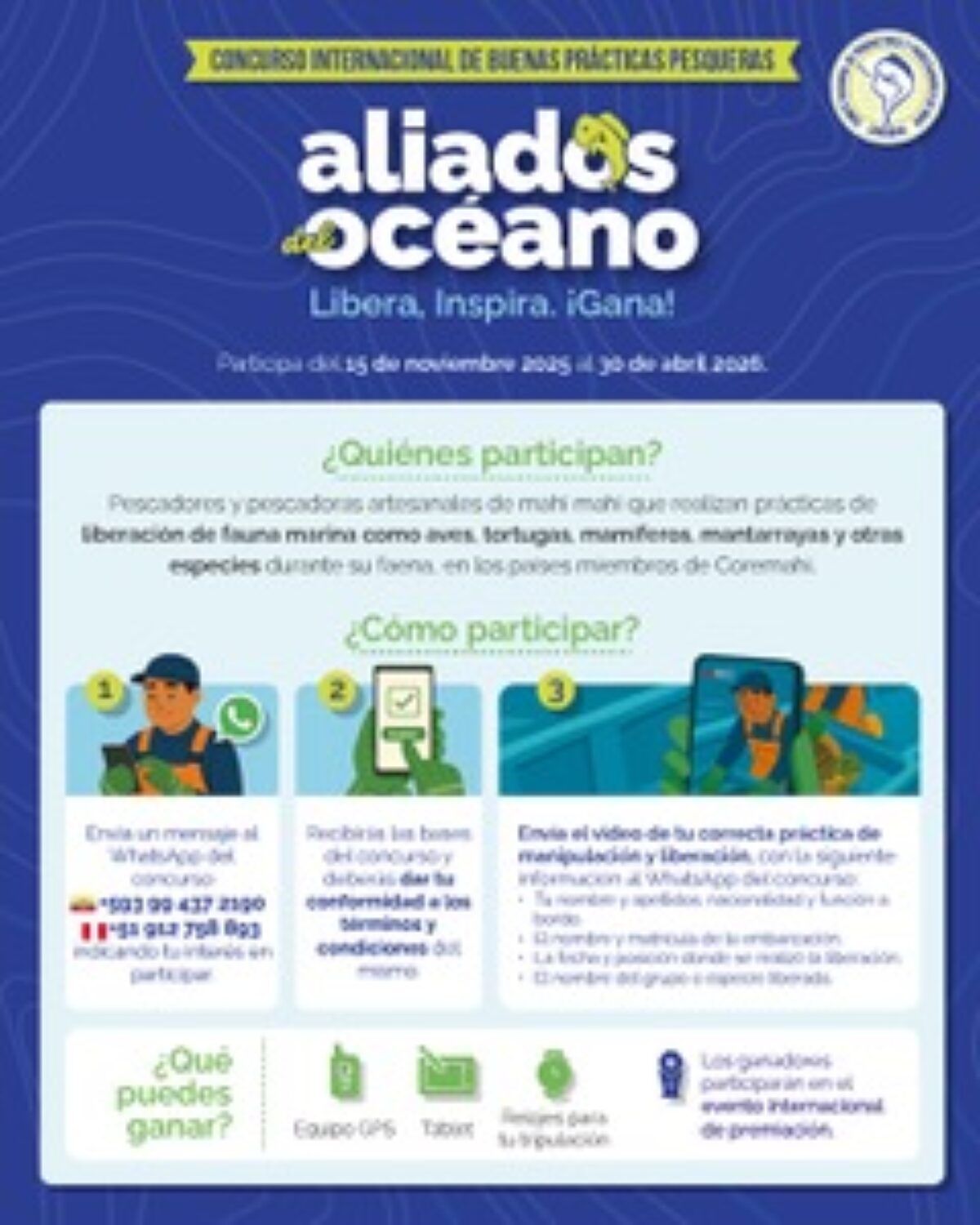
With the financial support of the Global Mahi Supply Chain Roundtable and Publix the Ocean Allies program will be recognizing and rewarding the commitment of fishermen from Peru, Ecuador, Costa Rica, Panama and Guatemala who demonstrate their commitment to addressing bycatch issues through data collection and best fishing practices.
All vessels that conduct fishing operations during the 2025-2026 fishing season will be encouraged to submit videos demonstrating their practices for the care and release of marine fauna such as birds, turtles, marine mammals, manta rays, and other species. Videos will include the vessel name, registration number, the fisherman’s name and role in fishing operations, nationality, date and location of the release, and a clear view of handling and release techniques used.
A jury of experts will evaluate the submissions of evidence and choose the winners based on release technique applied
From the submissions there will be two winners chosen from each country, each from a different vessel. These fishermen will have the opportunity to travel to a ceremony where they will be recognized as Ocean Allies by COREMAHI leadership and the SR Chair. They will receive recognition plaques and medals as well as small but meaningful prizes such as GPS and tablet units for their vessels.
The objective is that the information collected from Ocean Allies will be among information used to identify mitigation strategies for reducing ETP species interactions in the mahi fishery.